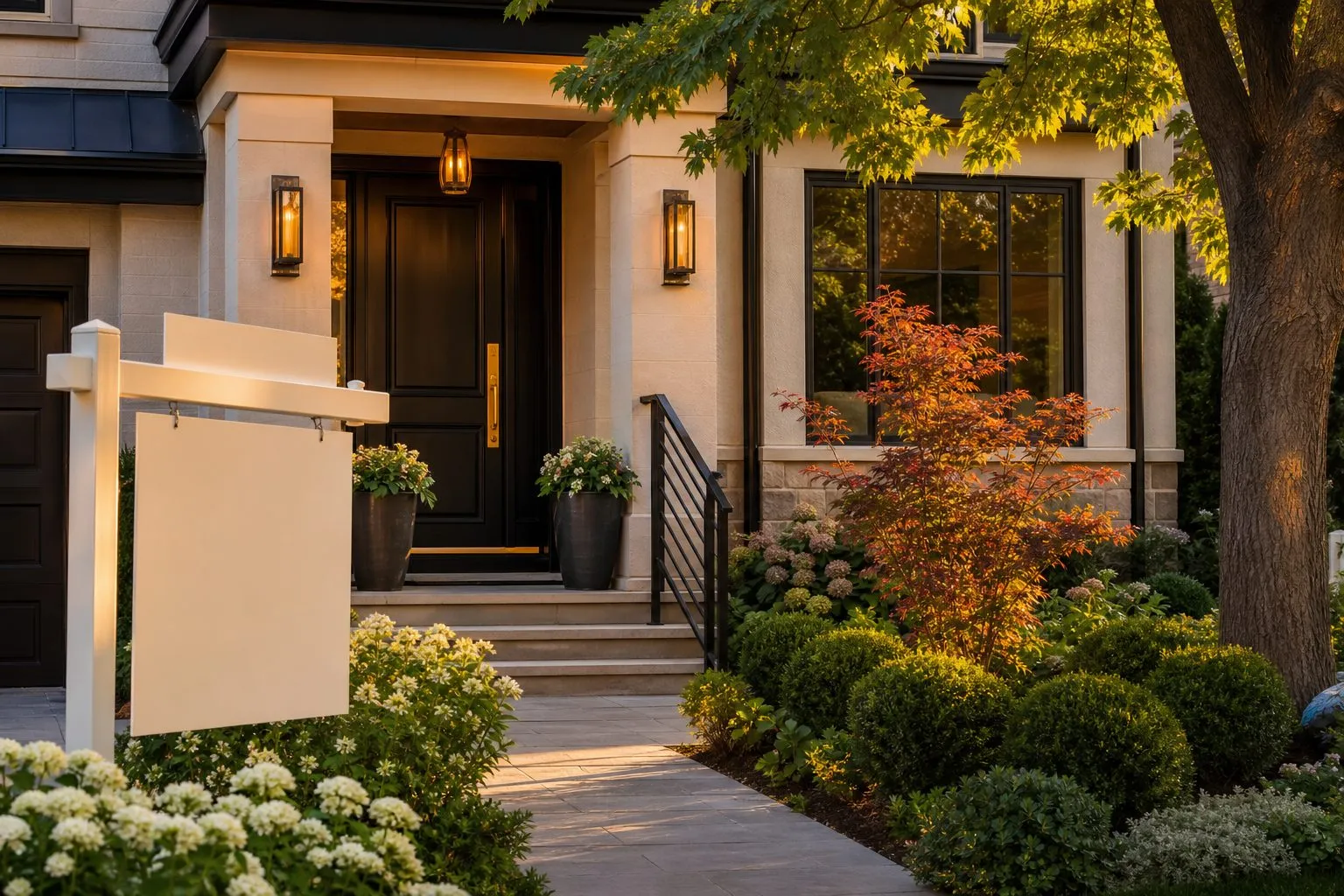
Buying your first home in the Greater Toronto Area is equal parts exciting and overwhelming. Prices here are higher than almost anywhere else in the country, the market moves quickly, and there’s a lot of jargon to learn. The good news: when you understand the steps in order, the process becomes far less intimidating. Here’s the same roadmap we walk our first-time buyers through every week.
Start with the money: down payment and closing costs
Before you tour a single home, get clear on what you can actually put together up front. There are two separate numbers to plan for: your down payment and your closing costs.
Minimum down payment rules in Canada
Canada sets a national minimum down payment based on the purchase price:
- 5% on the portion of the price up to $500,000
- 10% on the portion between $500,000 and $1,499,999
- 20% on homes priced at $1.5 million or more
So a $700,000 home needs at least $45,000 down — 5% of the first $500,000 plus 10% of the next $200,000. If your down payment is less than 20%, you’ll pay for mortgage default insurance (commonly called CMHC insurance), which protects the lender and is added to your mortgage. As of December 2024, insured mortgages are available up to a $1.5 million purchase price, and first-time buyers — along with anyone buying a newly built home — can qualify for a 30-year amortization, which lowers the monthly payment.
Don’t forget closing costs
Set aside roughly 1.5%–4% of the purchase price for costs due around closing. These typically include:
- Land Transfer Tax (Ontario charges it province-wide; the city of Toronto adds a second municipal tax)
- Legal fees and disbursements for your real estate lawyer
- Title insurance, a home inspection, and possibly an appraisal
- Adjustments for prepaid property taxes or utilities
First-time buyers can also claim a Land Transfer Tax rebate — and buyers in the city of Toronto can claim a second municipal rebate on top. It’s one of the few breaks that meaningfully lowers your cash to close, and we make sure you don’t leave it on the table when you buy in Toronto.
Get pre-approved, not just pre-qualified
A quick online “pre-qualification” is a rough estimate. A true pre-approval means a lender has reviewed your income, debts and credit, and committed to a specific amount and a rate hold (usually 90–120 days). In a competitive GTA offer, a real pre-approval is non-negotiable — sellers take it seriously, and it tells you precisely what you can spend before you get emotionally attached to a listing.
A few things lenders look at:
- Your gross debt service and total debt service ratios — how much of your income goes to housing and to total debt
- The federal mortgage stress test, which qualifies you at a rate higher than your contract rate
- Your credit score and employment stability
We’ll connect you with mortgage professionals we trust so this step is painless. Our full home-buying service page walks through how we support you from financing to keys.
The search: turn a wish list into a shortlist
Once you know your number, we get specific. The buyers who win are the ones who’ve decided in advance what actually matters to them:
- Non-negotiables vs. nice-to-haves — commute time, number of bedrooms, parking, outdoor space
- Neighbourhood fit — schools, transit, walkability, future development
- Property type — condo, freehold townhouse, semi or detached, each with a different cost and lifestyle
The best first home is rarely the “perfect” home. It’s the one that fits your life today and builds equity for the move you’ll make in five to ten years.
Where you buy shapes how far your budget stretches. A first-time buyer’s dollar behaves very differently in Toronto, where condos dominate the entry point, than in Mississauga, Brampton or Pickering, where you’ll find more freehold options for the same money. If you’re still narrowing down location, our areas guide compares neighbourhoods across the GTA.
Making an offer that holds up
When you find the one, we build an offer backed by evidence, not emotion. That means reviewing recent comparable sales, days on market and seller motivation, then deciding on:
- Price — anchored to what similar homes actually sold for
- Deposit — typically delivered within 24 hours of acceptance
- Conditions — financing, home inspection, and a status certificate review for condos
- Closing date — aligned with your mortgage and your move
In multiple-offer situations, sellers often request firm offers with no conditions. That can be the right move — but only when you’ve done the homework in advance: pre-approval locked, inspection arranged early, condo documents reviewed. We never let a buyer waive protections blindly.
Conditions, inspection and closing
After your offer is accepted, the conditional period is where due diligence happens:
- Your lender finalizes financing on the specific property
- A home inspection flags any major issues
- For condos, your lawyer reviews the status certificate (reserve fund, rules, any special assessments)
Once your conditions are satisfied, the deal is firm. Your lawyer handles title, registers the mortgage, calculates closing adjustments and Land Transfer Tax, and on closing day the keys are yours.
A simple first-timer timeline
- Weeks 1–2: Budget, pre-approval, and define your search
- Weeks 2–8: Tour homes and refine your shortlist
- The offer: Negotiate price and conditions
- 1–3 weeks: Satisfy conditions (financing, inspection)
- 30–90 days: Closing and possession
Every timeline is different, but knowing the shape of it keeps you calm when things move fast.
Ready to start?
You don’t have to memorize any of this — that’s our job. We’ll help you map a realistic budget, get pre-approved, and target the right neighbourhoods so your first purchase is one you feel great about for years. Reach out through our contact page to get started. Daniel and Heather both prefer a text — it’s the fastest way to get a quick, straight answer, even on a busy showing day.